
YOU’RE WRONG ABOUT WHAT YOU THINK THE WORLD LOOKS LIKE
Did you know, that for most of human history all mankind knew was poverty, this new phenomenal of wealth distributed as it is is very new.
What did the world use to look like?
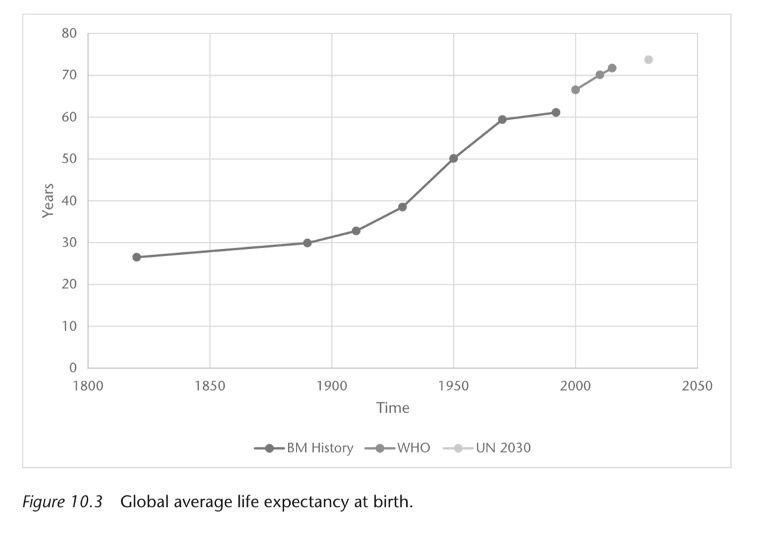
Looking at life expectancy:
I’ve linked sources and you can check the dat out for yourself. Average life expectancy at birth from 1820 to 2015 using data compiled by Bourguignon and Morrisson (2002) and theWorld Health Organisation (2018). The United Nation’s (2015) forecast of life expectancy in 2030 is also included.
Someone born in 1820 could expect to live twenty-seven years on average.
Read that again. The life expectancy in the 1800’s was 27.
I WOULD HAVE BEEN DEAD.
We cannot know the joys, challenges, triumphs, and disappointments that characterised the life of the typical person born in 1820. We do know, however, that this person’s life was short.
Because life was so short, many people never had the chance to experience much of what makes life meaningful. They didn’t get to watch their children grow up, build long careers, travel, pursue their passions, or enjoy decades of friendships and family life.
But look, something began to change!
Check the increase in life expectancy over the last two centuries. Around 1910, the curve starts to bend sharply upward, alongside a rapid growth in the world’s population. People were not just surviving infancy more often but were living longer, healthier lives.
Humanity wasn’t just adding years to life…it was adding more life to those years!
By 2015, life expectancy had almost tripled to 72 years.
Look what happened to poverty:
In the 1800’s 90% of the world lived in extreme poverty. And since the 1800’s you see a slow gradual decline.
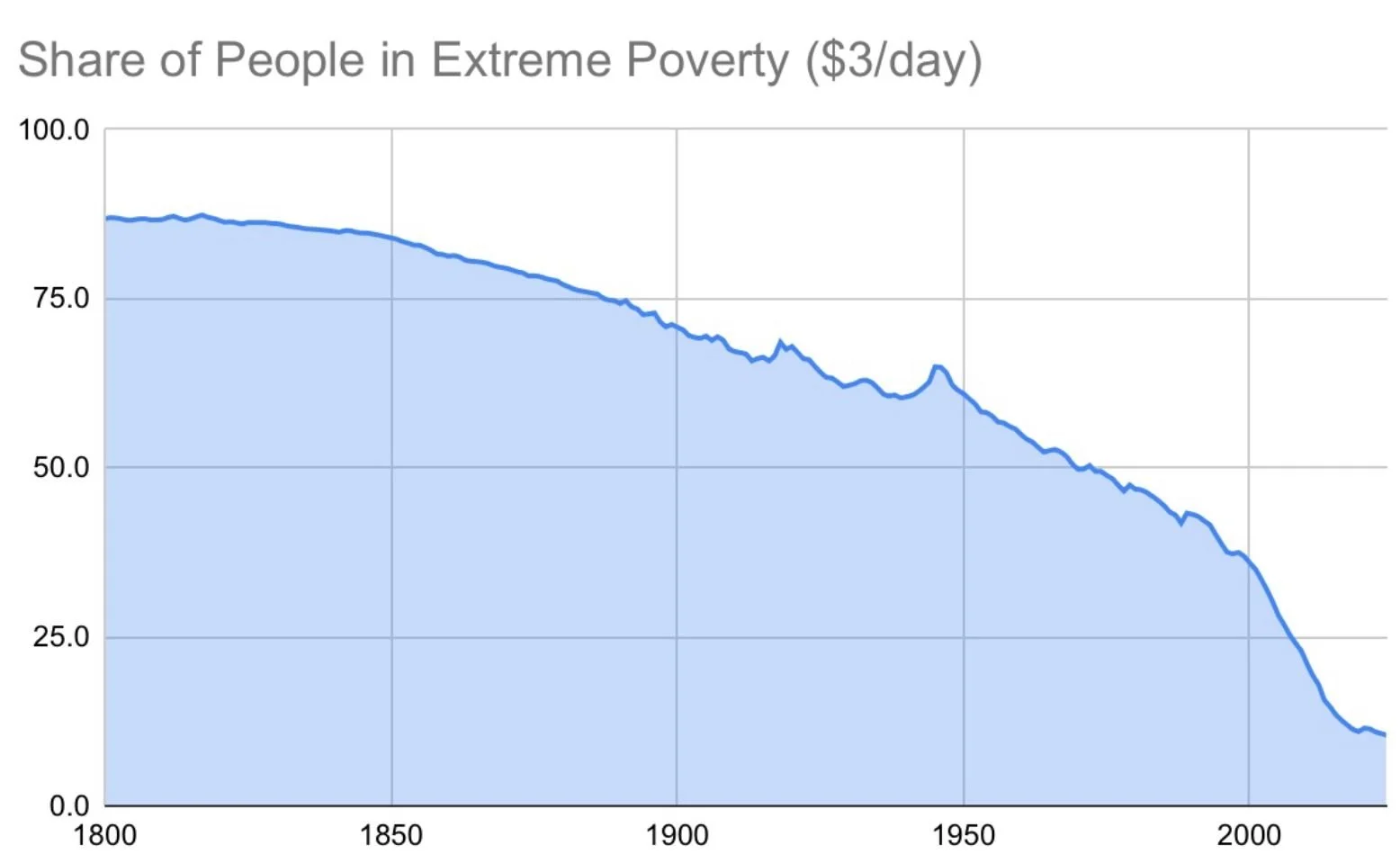
Today it is 10%
This is what we think the world looks like:
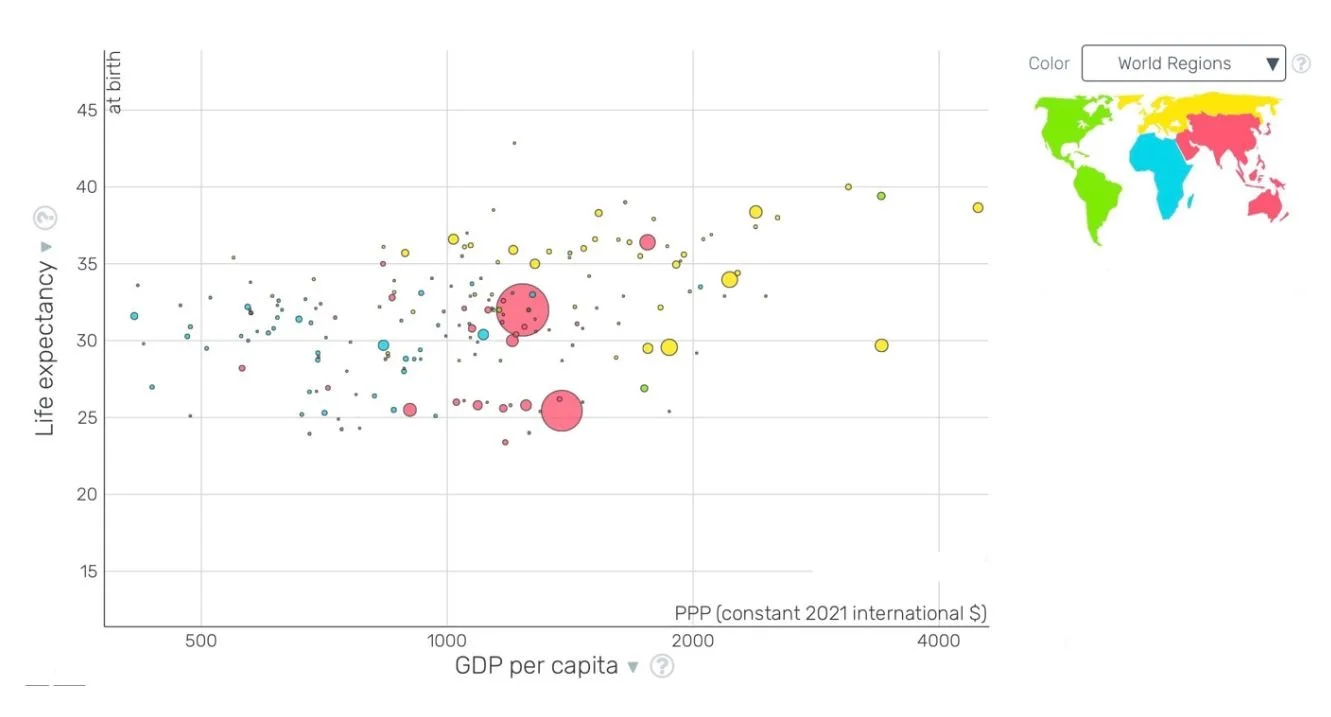
You look and see the green and yellow dots on the right and everyone else on the left. You get an overall picture of this “West is Best” “White is Right” The West and all the rest” but what if I told you something interesting…
That was 1800, not the present day.
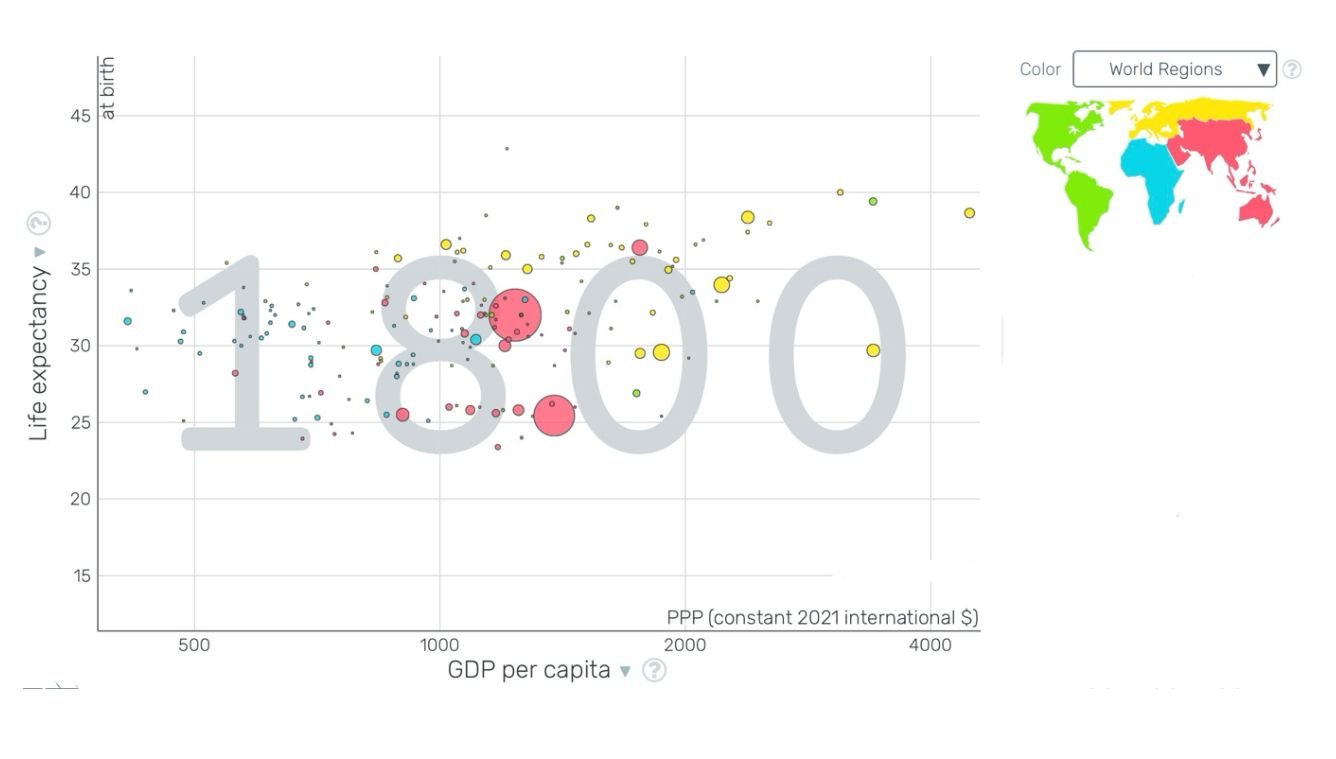
This is the present day:
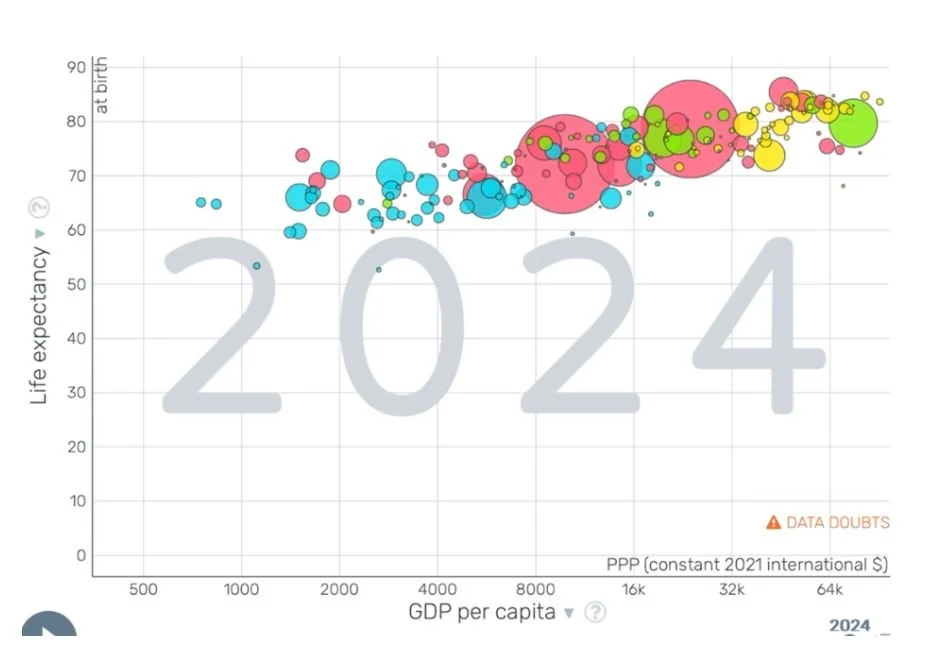
As you can see the countries that used to be labelled in the red have gotten a lot of wealth and their life expectancy has gone up since then. The distribution of the blue is also scattered. You still see a lot of yellow dots up there but they are surrounded with different colours.
We have a different picture of the world now, and it’s time to update our worldview.
We still think about the world as it was 200 years ago.
A place where extreme poverty was the norm, lives were shorter and opportunity reserved just for a few. That was the reality for most of human history, but it is no longer the reality for most people today.
To solve today’s challenges, we first need to understand today’s world.
The data shows that people are living more prosperous lives than at any other point in human history.
Look at where the income is:
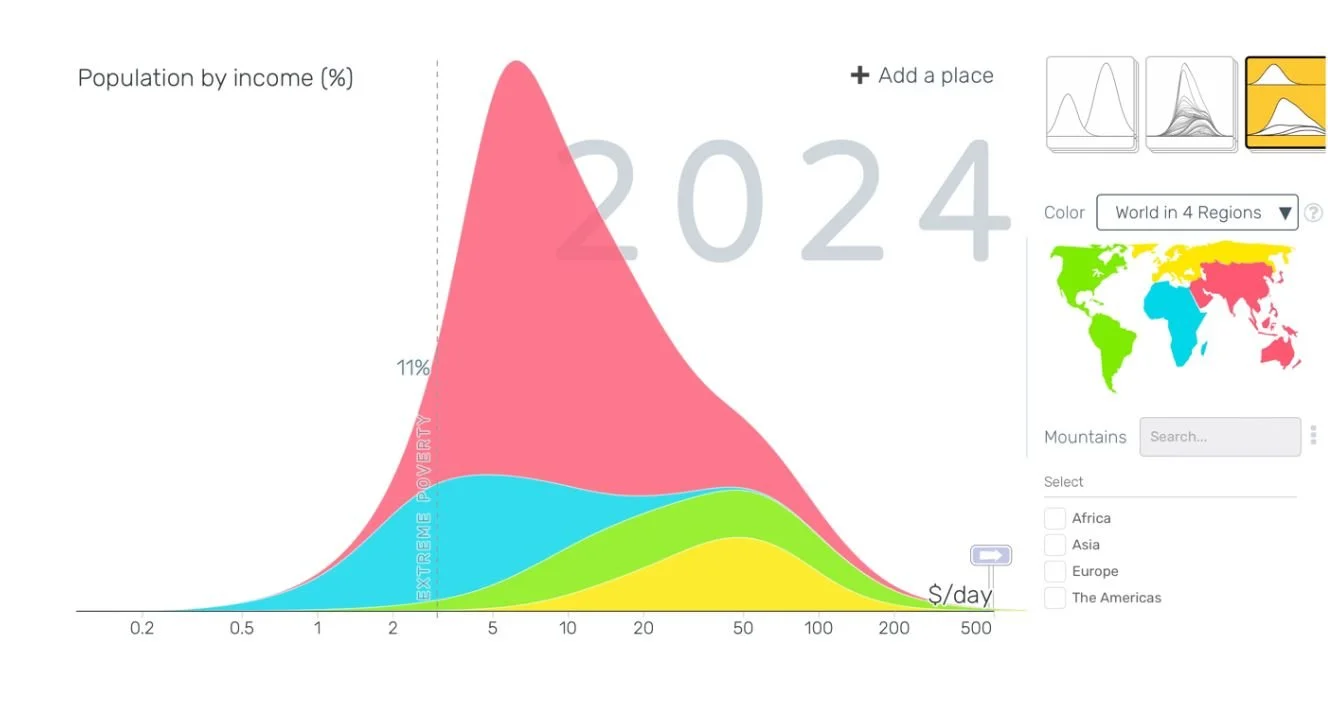
Concentered mostly in the middle.
This means that for the first time in human history, the typical person is not living in extreme poverty. They may not be rich, but they often have access to food, healthcare, education, electricity, sanitation, and opportunities that would have been unimaginable to most people born 200 years ago.
The point of all this is not that the world is perfect.
Millions of people still live in poverty. Wars are still fought. Crime remains a daily reality for many South Africans. Corruption, unemployment, inequality, and human suffering have not disappeared.
The point is that our perception of the world often lags behind reality.
When we look at the headlines, we see crises. When we scroll through social media, we see outrage. When we watch the news, we see disasters. Our minds are naturally drawn to what is wrong, not what is improving.
Yet the data tells a different story.
Over the last two centuries, humanity has achieved something that would have seemed impossible to our ancestors.
People live longer.
More children survive infancy.
Extreme poverty has fallen dramatically.
Education, healthcare, and opportunity have expanded to billions of people.
The world still has enormous problems to solve, but it is not the world it once was. If we want to understand where we are going, we first need to understand how far we have come.
Because progress is not something that happened by accident. It was created by ideas, institutions, innovation, and the hard work of countless people over generations.
And that raises an even more important question:
If humanity was able to transform the world so dramatically over the last 200 years, what exactly happened in the 1800s that changed everything?
Economists call it the Great Hockey Stick of History.
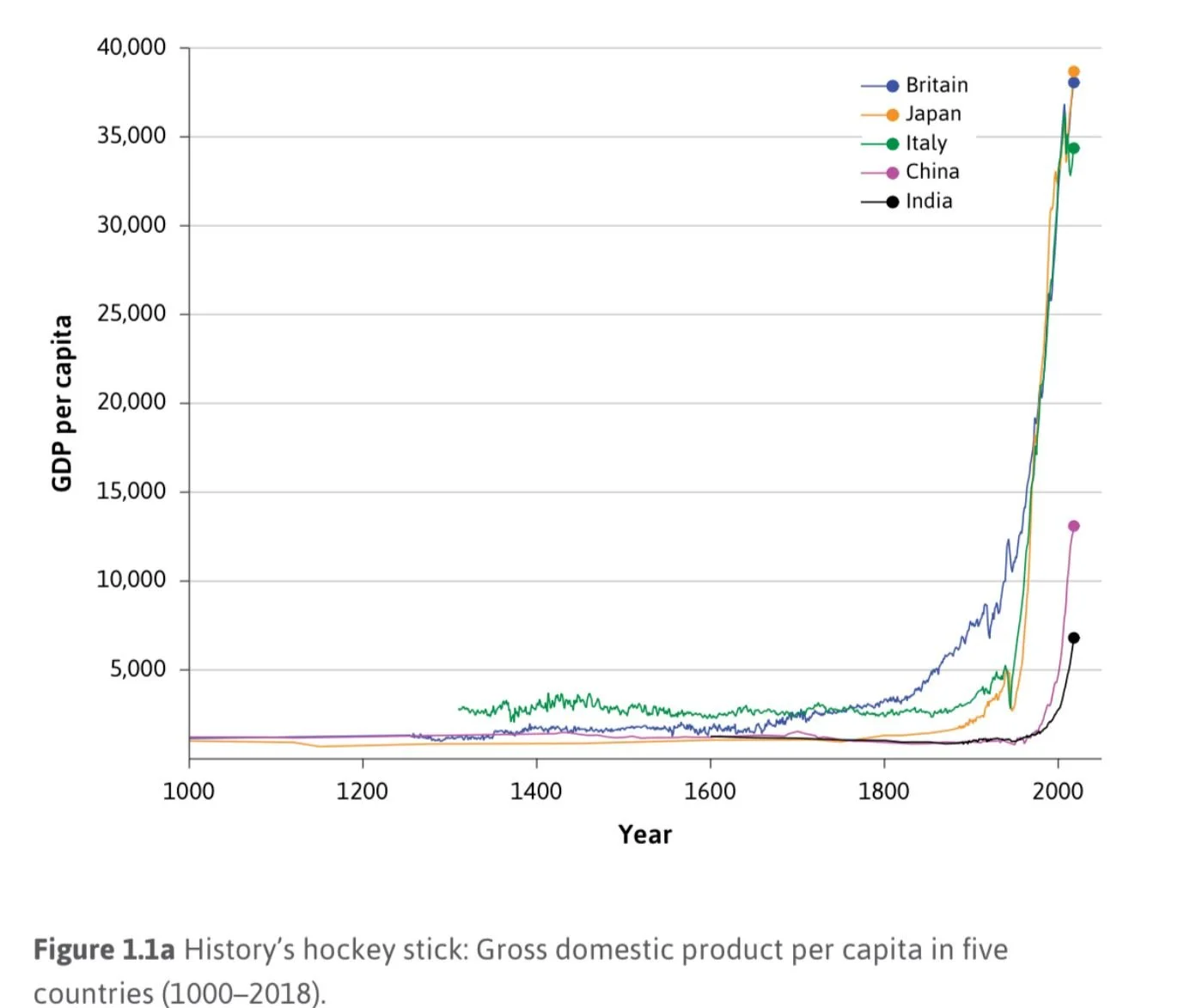
The country of the USA seems to be synonymous with this idea of progress, but what specifically happened in the USA to make it the most powerful nation in the world?
I’ll tell you about that next.
Looking forward to changing the world with you. ❤️🌍
